Pattaya is not the city you think it is
A photographer spent a year documenting the mornings of a city everyone only writes about at night.
I spent a year photographing Pattaya between five and nine in the morning, because I was tired of a city I live in being described exclusively by people who only ever saw it after eleven at night.
Here is what is on the beach road at half past five.
“The mornings are the honest hours. Everything transactional is asleep, and what is left is a working Thai city doing what every working Thai city does at six.”
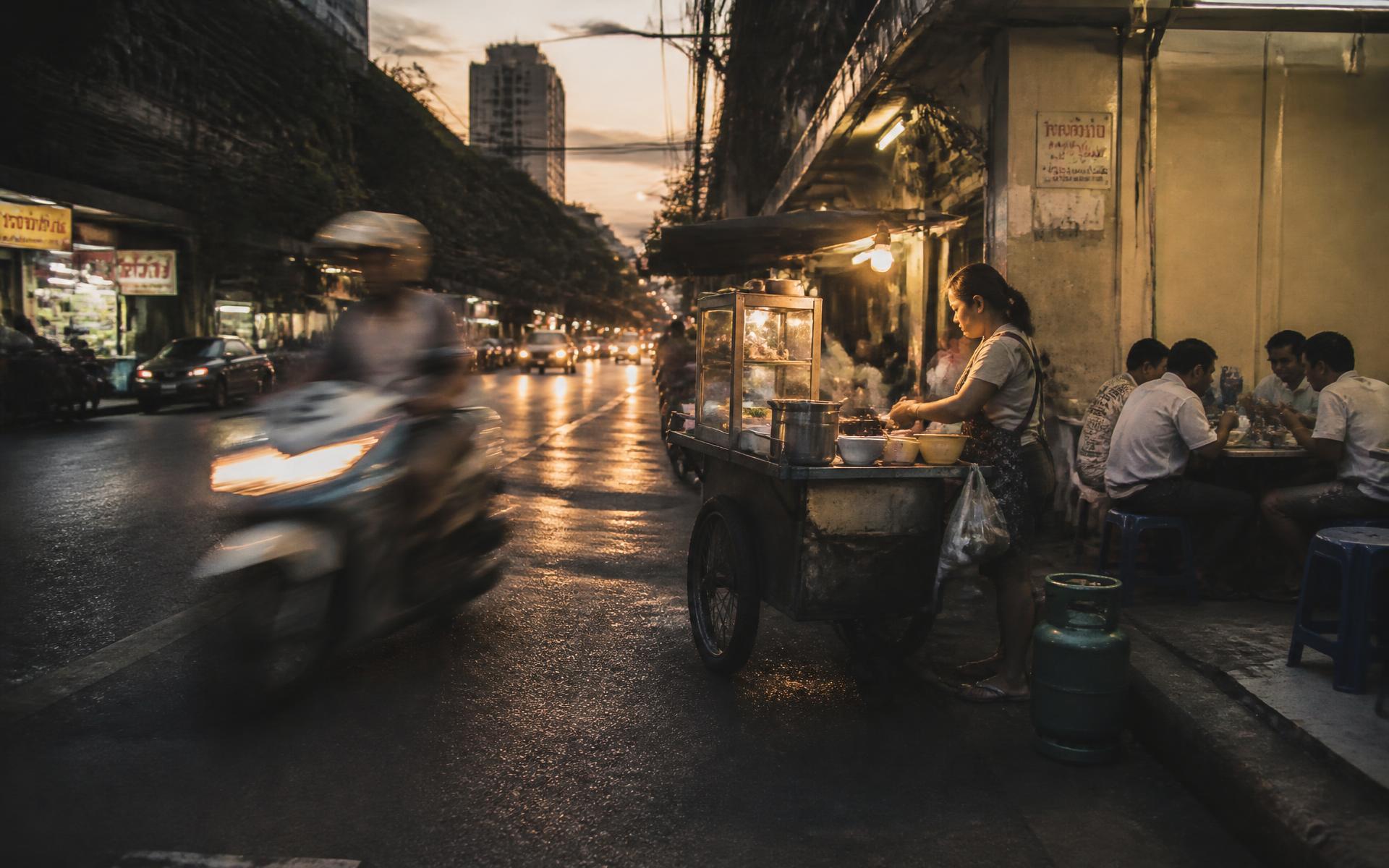
Municipal sweepers, mostly women in their fifties and sixties in wide hats, working in a line from Dolphin Roundabout south. Fishermen coming in at Naklua with the night's catch, and the wholesale buyers standing at the top of the ramp with cash in a bumbag. A very serious badminton game under the lights at Soi 6/1, four men who have clearly played each other for twenty years. Monks on alms round on Third Road, and a queue of women waiting with rice, which contradicts everything the internet believes about this town in about four seconds.
Then the joggers, then the sea-swimmers — mostly Thai retirees and a contingent of Russian families — then the schoolchildren in immaculate uniforms walking past the shuttered bars, which is the image I could not stop taking and never quite got right. A nine-year-old in white socks passing a steel shutter with a neon sign above it that says nothing at all in daylight.
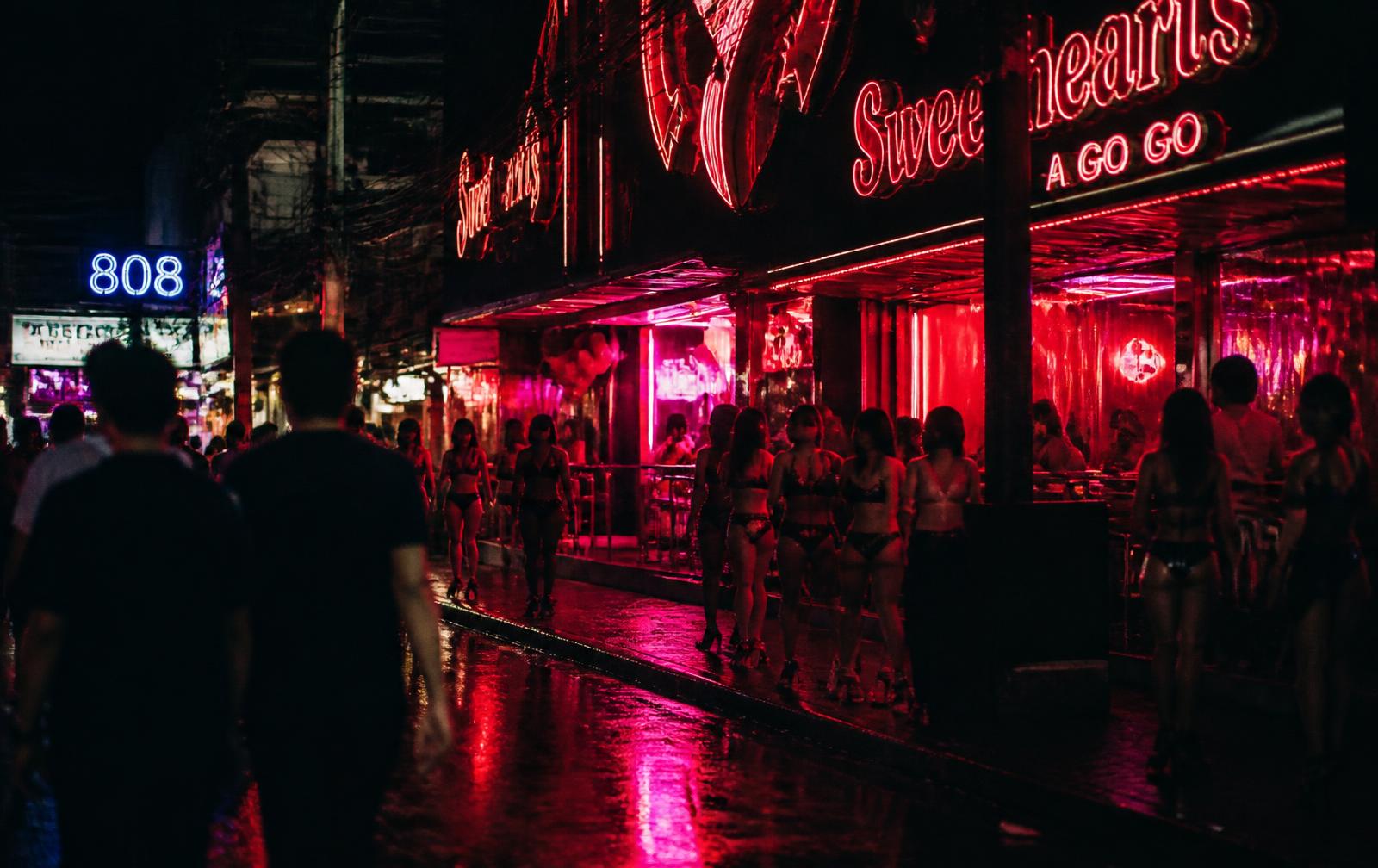
Pattaya has a population of around 120,000 registered residents and probably twice that in practice. The nightlife economy is real and it is large and I am not here to pretend otherwise — it employs tens of thousands of people and it is the reason most foreigners have heard of the place. But it occupies a strip. It is geographically smaller than visitors imagine, and for most of the people who live here it is simply the industry down the road, in the way that a port town has a port.
Behind it there is a city that almost nobody photographs: a large Thai middle class in the estates off Sukhumvit, three enormous hospitals, an international school run, a Russian-speaking population big enough to have its own supermarkets and dentists, and a fishing community in Naklua that predates all of it by a century.
I photographed a family in Soi Khao Noi who have run the same laundry for twenty-two years. Their daughter is at Chulalongkorn studying engineering. When I asked the mother what she thought of what people say about Pattaya, she said she does not read it, because it is in English, and then she laughed at me for a while.
The mornings are the honest hours. Everything transactional is asleep. What is left is a working Thai city with an unusual industry attached, doing the same things every working Thai city does at six in the morning: sweeping, cooking, praying, delivering ice.
I do not want to over-correct. There are genuinely ugly things here and I photographed some of them, and there is a version of this piece that would be dishonest in the opposite direction — the tourist-board version where nothing bad happens after dark. Both versions are lies of framing.
The truthful thing is smaller and harder to sell: Pattaya is a city of a quarter of a million people, most of whom will never set foot in the part of it you have seen photographs of, and all of whom are up before you.