The last noodle cart on Soi 38
For thirty-one years she opened at nine at night. This month the street changed, and so did she.
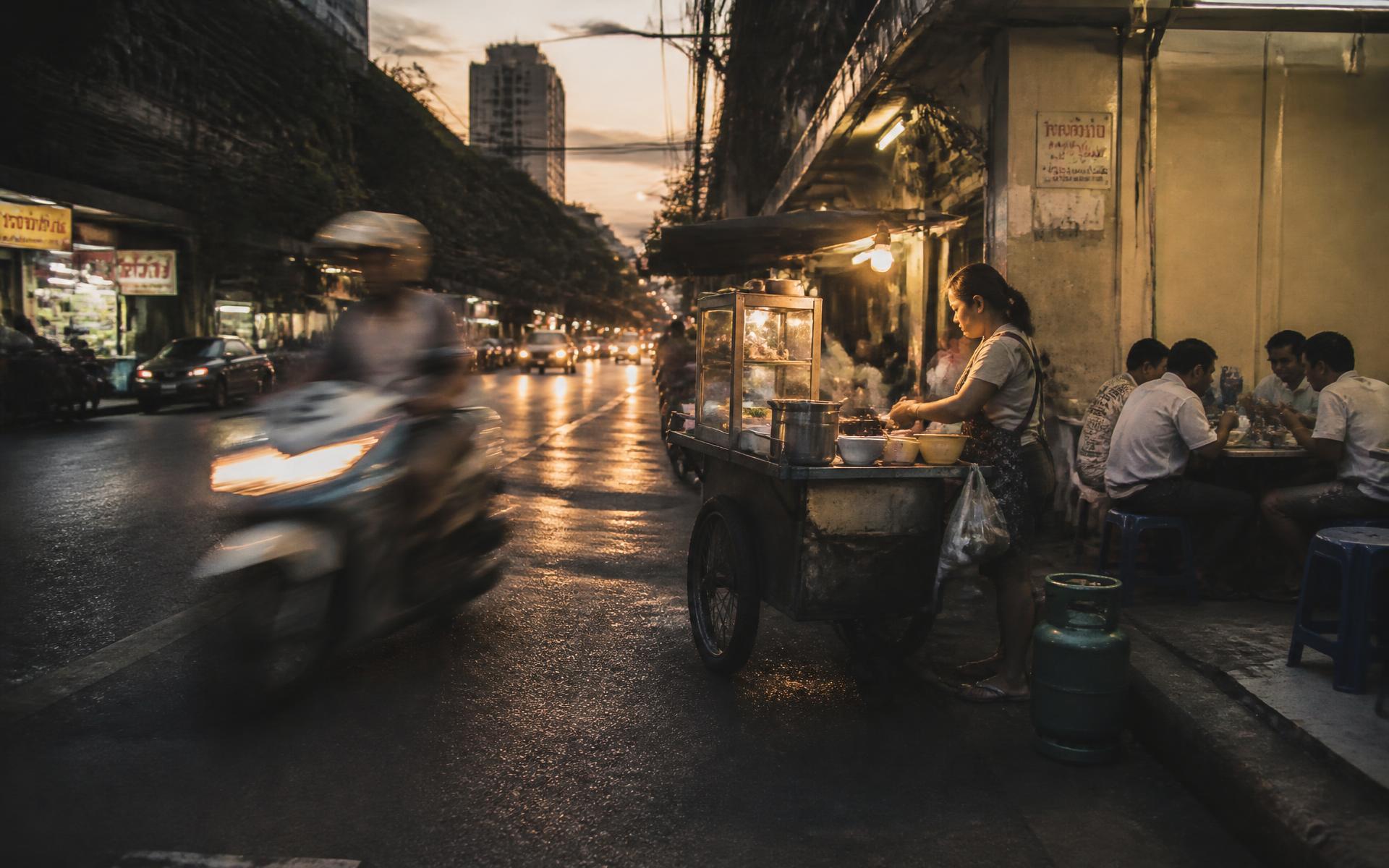
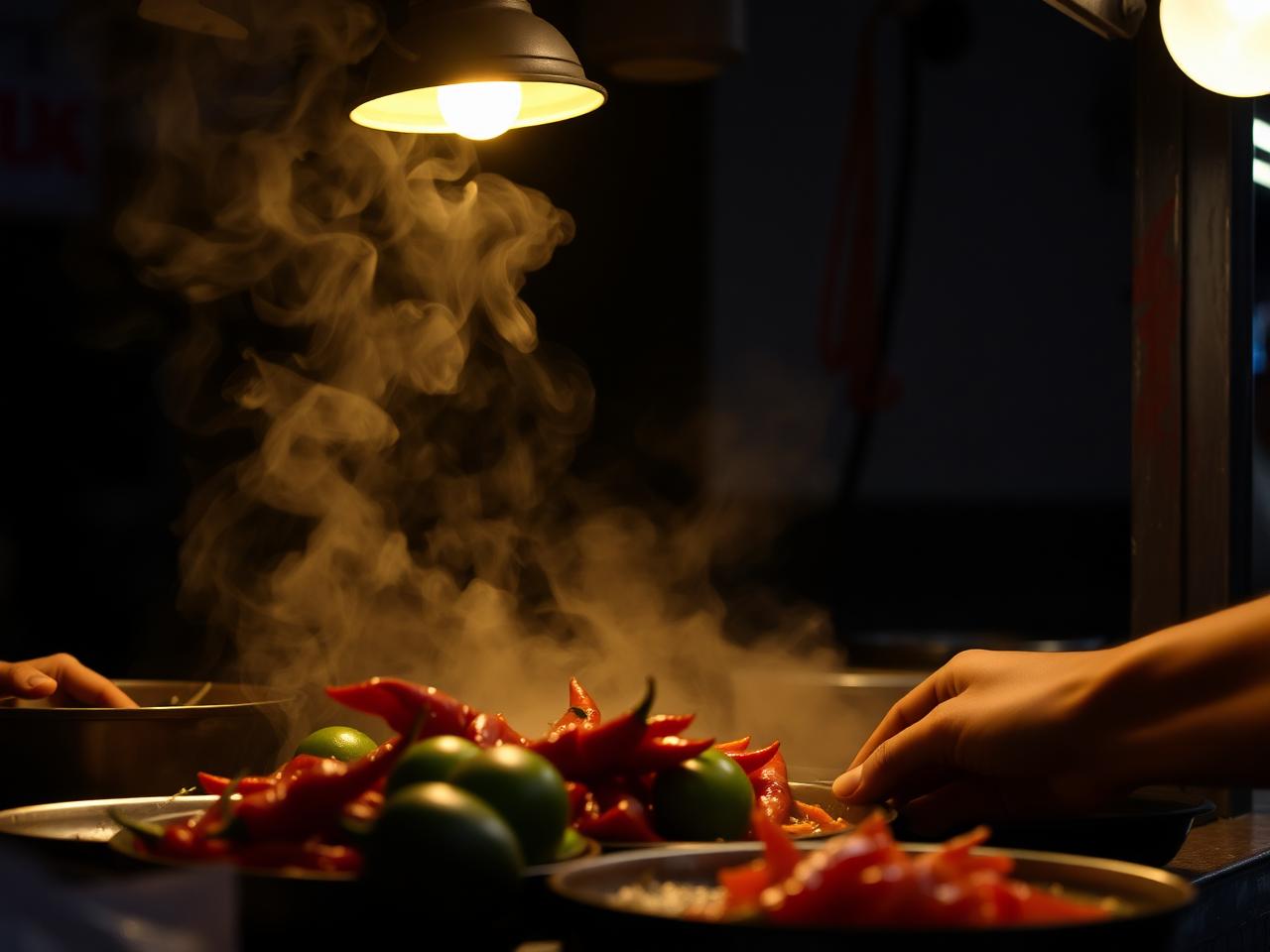
For thirty-one years, Pranee Sirichai opened her cart at nine at night on the mouth of Sukhumvit Soi 38 and closed it when the last drunk had been fed, which was usually somewhere between three and four in the morning. She sold one dish. Beef noodle soup, dark broth, the recipe from her husband's mother, cooked in a pot that has never been fully emptied in three decades — she tops it up, she never starts it again.
I ate there perhaps two hundred times before I ever asked her a question.
“The romance of street food is almost entirely held by the people who eat it, rather than the people who cook it.”
Soi 38 used to be the most famous street food alley in Bangkok, the one every guidebook sent you to, forty carts deep and steam to the ceiling. It closed in 2016 when the land was sold and the condominium went up. Most of the vendors scattered — some to Soi 40, some to the markets out past On Nut, some simply stopped. Pranee moved eleven metres and kept going.
"I did not think about it," she says, when I ask what she considered doing instead. "The pot was still hot."
She is sixty-eight. Her hands have the particular scarring of someone who has been reaching over boiling liquid since she was a teenager, a pale mapping across the inside of both forearms. She works with her daughter-in-law now, who does the money, and a nephew who arrives at eleven to do nothing but wash bowls until closing.
The economics are worth writing down, because nobody ever writes them down. A bowl is 60 baht. On a good night she sells 180 bowls. Beef has gone up 40 per cent in four years; gas has gone up; the pitch fee has gone up. On a bad night — rain, and it rains for six months — she sells forty. She has no pension. She has no insurance beyond the 30-baht universal scheme. She has never had a day where the cart did not go out because she did not feel like it.
This month the street changed again. The BTS extension works have taken the pavement she stood on. She has been offered a unit inside a new air-conditioned food hall two hundred metres away: a fixed rent, a fixed closing time of ten, a laminated menu, a QR code.
She took it. She starts in October.
I asked her whether she was sad and she looked at me the way Thai people look at foreigners who want an emotion to be tidy.
"Inside is cooler," she said. "I am sixty-eight."
There is a version of this story that mourns. It is a very easy version to write, and I have read it a hundred times, always by someone who did not have to stand in the rain at two in the morning. The romance of street food is almost entirely a romance held by people who eat it rather than people who cook it. Every vendor I have ever interviewed in this city has wanted, at some point, a wall and a fan and a chair.
What is actually being lost on Soi 38 is not charm. It is the hours. The food hall closes at ten, and Bangkok's night workers — the taxi drivers, the nurses coming off shift, the security guards, the people who made that alley what it was — eat at one in the morning. The city is quietly rezoning itself around people who are asleep by then.
On her second-to-last night I went and sat on the low plastic stool by the wall, which is the good seat because the steam goes the other way. She gave me an extra ladle of the dark broth without being asked, which is the only compliment that has ever been paid to me in this country that I fully understood.
Then she went back to the pot, which has been on since 1994, and which she is taking with her.